Retail Chatbots: Use Cases for Boosting Sales

Fares Elhelali
15 min read
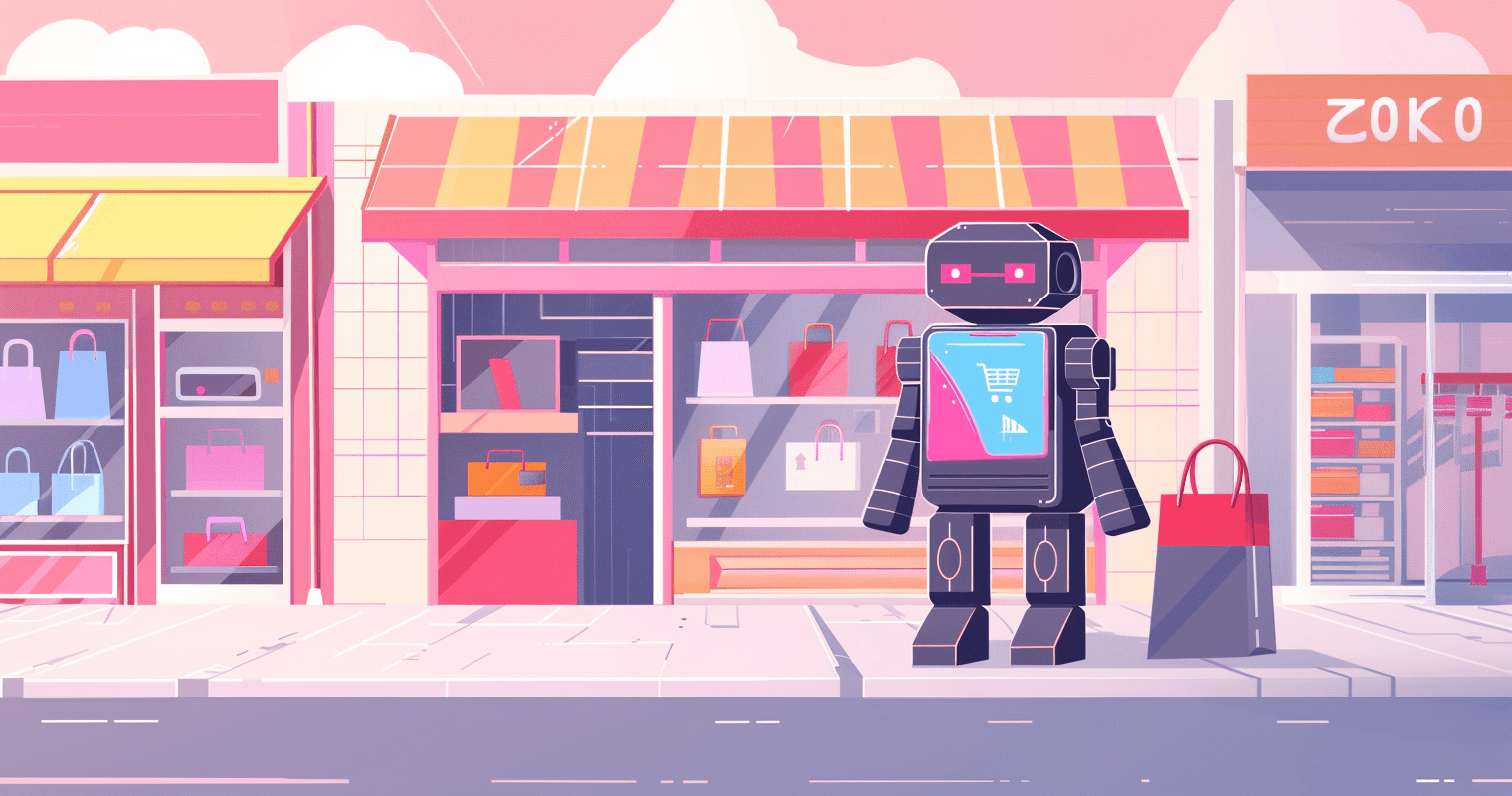
Retail is one of the industries being transformed most dramatically by AI. With retail and e-commerce holding nearly 28% of the global chatbot market revenue and projected to generate over $112 billion in sales through virtual assistants, AI agents have moved from nice-to-have to essential infrastructure for retailers of all sizes.
The numbers tell the story. 58% of businesses using AI agents report increased sales. AI-powered funnels convert 2.4x higher than traditional web forms. E-commerce stores using AI agents see cart abandonment drop by 20-30%. And 31% of shoppers add products after receiving AI-powered recommendations.
This guide explores what retail AI agents are, the most impactful use cases, the concrete benefits they deliver, and how to implement one for your business.
What Are Retail AI Agents?
Retail AI agents are intelligent virtual assistants designed specifically for the retail and e-commerce industry. They engage with customers across your website, mobile app, social media channels, and messaging platforms like WhatsApp and Messenger, handling everything from product questions and recommendations to order tracking and post-purchase support.
Unlike basic rule-based bots that follow rigid scripts, modern retail AI agents use natural language processing and machine learning to understand what customers are actually asking. They can hold natural conversations, remember context within a session, and provide personalized responses based on customer behavior and preferences.
The best retail AI agents don't just answer questions. They actively drive revenue by guiding shoppers toward the right products, recovering abandoned carts, and creating personalized experiences that increase average order value and repeat purchases.
Top Use Cases for Retail AI Agents
1. Personalized Product Recommendations
This is where retail AI agents deliver some of their strongest ROI. By analyzing browsing behavior, purchase history, and stated preferences, AI agents can suggest products that are genuinely relevant to each individual shopper.
The impact is significant. 31% of e-commerce shoppers add products after receiving AI-powered recommendations, and personalized suggestions can increase average order value by 15% on average. It's the same principle behind Amazon's recommendation engine, which drives roughly 35% of their total web sales, but now accessible to businesses of any size.
A customer browsing winter jackets can receive suggestions for matching accessories. A repeat buyer can see new arrivals in their preferred style. A first-time visitor can answer a few questions and get tailored recommendations immediately.
2. Instant Customer Support
Speed is everything in retail. 62% of consumers prefer interacting with an AI agent over waiting for a human, and 78% of customers who favor AI agents do so primarily because of quick responses.
Retail AI agents handle the questions that make up the bulk of support volume: shipping times, return policies, size guides, product availability, payment options, and store hours. They respond in seconds rather than minutes or hours, keeping customers engaged instead of frustrated.
For complex issues that need human attention, AI agents collect the details and hand off seamlessly to a human agent with full context. No "please repeat your issue" moments.
3. Order Tracking and Delivery Updates
Order tracking is one of the highest-volume inquiry types in retail. Customers want to know where their stuff is, and they want to know now.
AI agents can integrate with your logistics and fulfillment systems to provide real-time order status, shipping updates, and estimated delivery times directly in the conversation. This alone can reduce support ticket volume by 30% or more, since tracking inquiries are repetitive and easily automated.
Some AI agents can even proactively notify customers when their order ships, when it's out for delivery, or if there's a delay, turning a potential frustration point into a positive touchpoint.
4. Virtual Shopping Assistants
Not every shopper knows exactly what they want. AI agents can act as personal shopping assistants, guiding customers through product discovery based on their needs, budget, and preferences.
For fashion retailers, this might mean asking about style preferences, occasions, and sizing to recommend outfits. For electronics stores, it could be comparing specs and features across products. For beauty brands, it could be recommending products based on skin type and concerns.
This guided experience keeps visitors engaged longer and helps them find what they need without aimlessly browsing through hundreds of products. The result is higher conversion rates and greater customer satisfaction.
5. Abandoned Cart Recovery
Cart abandonment is one of the biggest revenue leaks in e-commerce. The average abandonment rate hovers around 70%, and for many retailers, recovering even a fraction of those carts represents significant revenue.
AI agents can help in two ways. First, they can proactively engage customers who appear stuck during checkout, offering help with questions about shipping, returns, or payment options that might be causing hesitation. Second, they can follow up with customers who leave items in their cart, sending personalized reminders through Messenger, WhatsApp, or on-site when they return.
E-commerce stores using AI agents for cart recovery have seen revenue boosts of 7-25%, with a 20-30% reduction in overall cart abandonment.
6. Upselling and Cross-Selling
AI agents are natural upsellers. When a customer is looking at a product, the AI agent can suggest complementary items, premium alternatives, or bundle deals based on what other customers have purchased together.
This isn't the aggressive "would you like fries with that" approach. It's contextual, helpful suggestions that genuinely improve the customer's experience. A customer buying a laptop gets recommended a case and charger. A customer browsing a dress sees matching shoes. A customer adding a skincare product gets suggested a complementary serum.
On average, conversational upsells generate a 14% revenue lift. That's significant revenue that most retailers are leaving on the table.
7. Feedback Collection
Understanding what your customers think is critical for retail success. AI agents can collect feedback naturally during or after interactions, asking about product satisfaction, delivery experience, or overall service quality.
Conversational feedback feels less tedious than traditional survey forms and typically generates higher response rates. The data flows directly into your analytics, giving you real-time insights into what's working and what needs improvement.
8. Loyalty Program Management
AI agents can handle the operational side of loyalty programs that customers frequently ask about: checking point balances, explaining how to redeem rewards, notifying customers about exclusive offers, and reminding them about expiring points.
This keeps customers engaged with your loyalty program without adding to your support team's workload. It also creates natural opportunities to surface personalized promotions and drive repeat purchases.
9. Multilingual Customer Engagement
Retail is increasingly global. AI agents can communicate with customers in their preferred language, breaking down barriers for international shoppers without the cost of multilingual support teams.
With platforms like Chatbase supporting 80+ languages, a single AI agent can serve customers worldwide, providing the same quality of personalized service regardless of language.
10. Proactive Engagement
Most retail websites are passive. Visitors browse, and if they don't find what they need, they leave. AI agents can flip this by initiating conversations at strategic moments.
When a visitor has been on a product page for 30 seconds without scrolling, the AI agent can offer to answer questions. When someone is browsing a category for the third time, the agent can ask what they're looking for. When a visitor lands from a specific ad campaign, the agent can tailor its greeting to match.
Proactive AI agents can increase website conversions by up to 38%, turning passive browsers into active buyers.
Benefits of Implementing Retail AI Agents
Revenue growth. 58% of businesses using AI agents report increased sales. Between personalized recommendations, cart recovery, upselling, and 24/7 availability, AI agents create multiple new revenue opportunities.
Cost reduction. AI agent interactions cost roughly $0.50-$0.70 each compared to $6-$15 for human agent interactions. That's a 90%+ cost reduction for routine inquiries.
24/7 availability. Your store never closes. AI agents engage shoppers around the clock, capturing sales and leads that would otherwise be lost outside business hours.
Scalability. Handle Black Friday traffic the same way you handle a quiet Wednesday. AI agents scale instantly to meet demand spikes without additional staffing.
Consistent experience. Every customer gets accurate, on-brand responses. No inconsistencies between agents, no off days, no information gaps.
Data-driven insights. Every conversation generates valuable data about customer preferences, common questions, product interest, and pain points. Use this data to inform merchandising, marketing, and product decisions.
Reduced support burden. By handling 70-80% of routine inquiries, AI agents free your human team to focus on complex issues, VIP customers, and revenue-generating activities.
Best Practices for Retail AI Agents
Train on your actual product data. Your AI agent needs to know your products inside and out. Upload your product catalog, FAQ pages, return policies, shipping information, and any other content customers commonly ask about.
Start with high-impact use cases. Don't try to automate everything at once. Start with your highest-volume inquiries (typically order tracking, product questions, and return policies) and expand from there.
Personalize the experience. Use customer data to tailor conversations. A returning customer should get a different experience than a first-time visitor. Reference past purchases, recommend based on browsing history, and use the customer's name.
Ensure seamless human handoff. For complex issues, complaints, or high-value sales conversations, make sure the transition from AI agent to human is smooth. The human agent should receive full conversation context so the customer never has to repeat themselves.
Optimize for mobile. Most e-commerce browsing happens on phones. Make sure your AI agent works perfectly on mobile devices.
Measure and iterate. Track conversion rates, resolution rates, customer satisfaction, and revenue impact. Review conversation logs to find gaps and opportunities. Continuously improve based on real data.
Match your brand voice. Your AI agent should sound like your brand. A luxury retailer's agent should feel different from a casual streetwear brand's agent. Customize the tone, vocabulary, and personality to match your audience.
Build Your Retail AI Agent with Chatbase
Chatbase is an AI agent builder platform that makes it easy to create and deploy intelligent retail assistants. Here's why retailers choose Chatbase:
- Multi-model AI. Chatbase supports leading models from OpenAI, Anthropic, Google Gemini, DeepSeek, and Meta. Your AI agent gets top-tier conversational intelligence for natural, helpful shopping conversations.
- Train on your product data. Upload your product catalog, crawl your website, connect Notion, or add Q&A pairs. Your agent becomes an expert on your products, policies, and brand.
- No-code setup. Build and deploy in minutes. No developers required.
- Omnichannel deployment. Deploy on your website, WhatsApp, Messenger, Slack, and more. Meet shoppers wherever they are.
- E-commerce integrations. Works with Shopify, WordPress, Wix, Squarespace, and other platforms through embed code or integrations.
- Lead capture and analytics. Capture customer data, track AI agent performance, and gain insights into shopping behavior.
- 80+ languages. Serve global customers in their preferred language.
- Human handoff. Seamlessly escalate complex conversations to your team with full context.
- GDPR compliant and SOC 2 certified. Enterprise-grade security for customer data.
- Free plan available. Test the platform before committing.
Ready to transform your retail business with an AI-powered shopping assistant? Get started with Chatbase for free today.
Share this article: