7 Types of Chatbots & How to Choose the Right One

Fares Elhelali
12 min read
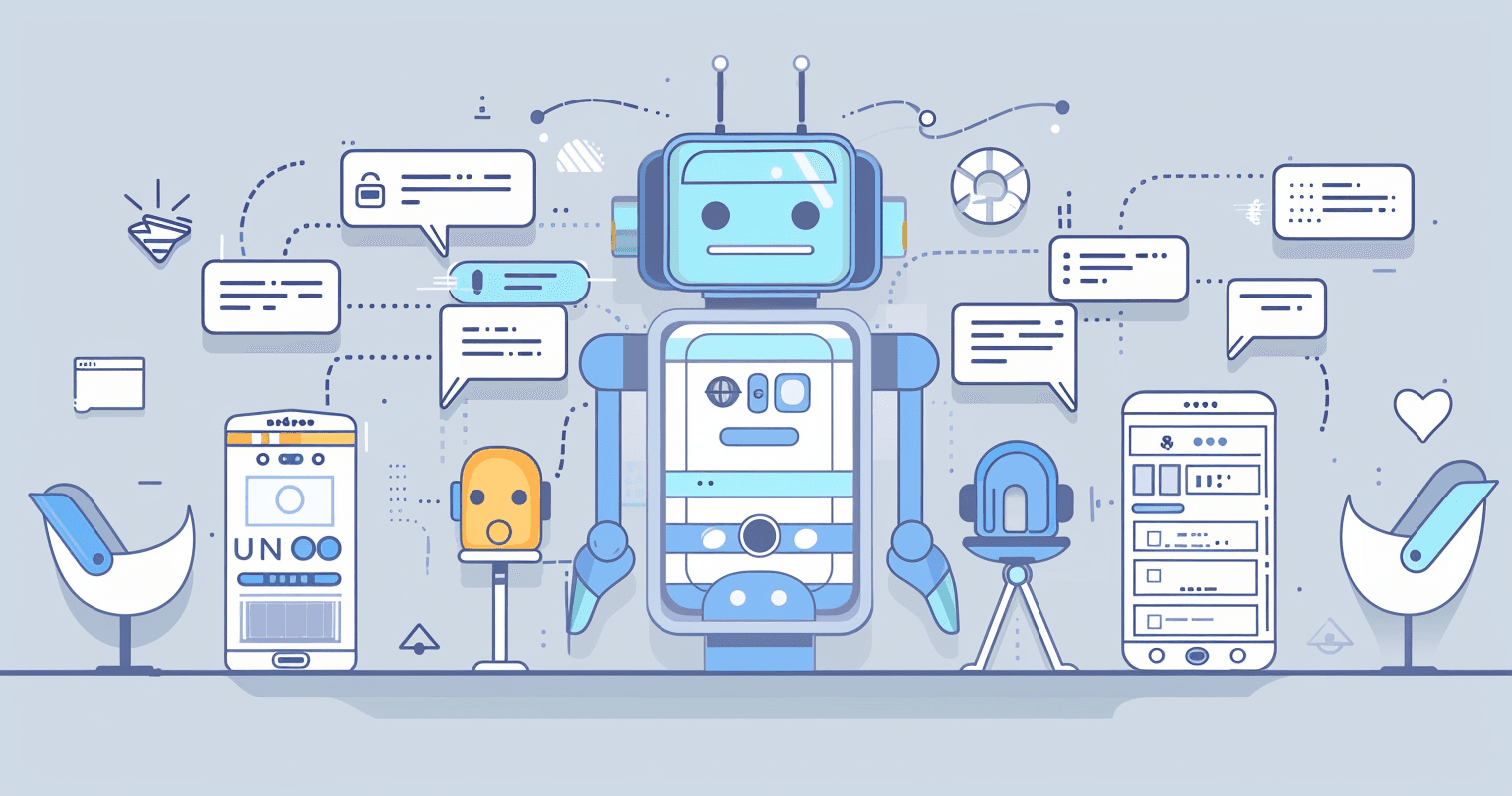
Chatbots have become essential tools for businesses looking to enhance customer engagement, streamline operations, and provide round-the-clock support. But not all chatbots are created equal.
The term "chatbot" covers a wide spectrum of technology, from simple scripted bots that follow rigid decision trees to sophisticated AI agents that can hold natural conversations and take autonomous actions. Choosing the wrong type for your needs means wasted money and frustrated customers. Choosing the right one means better support, more leads, and happier customers.
This guide breaks down the seven main types of chatbots, explains what each does best, and helps you figure out which one is the right fit for your business.
1. AI Chatbots
AI chatbots represent the most advanced category of conversational technology. These bots use large language models, natural language processing (NLP), and machine learning to understand what users are actually asking and generate relevant, human-like responses.
Unlike simpler alternatives, AI chatbots don't rely on pre-written scripts or keyword matching. They understand context, handle multi-turn conversations, and can reason through complex queries. They learn from your training data to become experts on your specific business, products, and policies.
Key features:
- Advanced natural language understanding that handles the way real people talk
- Ability to maintain context across long conversations
- Training on custom data (your documents, website, knowledge base)
- Continuous improvement through interaction data
- Support for multiple languages
Best for:
- Businesses that want to automate customer support without sacrificing quality
- Companies with high inquiry volumes that need scalable, intelligent responses
- Organizations looking to provide personalized experiences based on customer data
- Any business that wants a chatbot that can handle more than just FAQs
Real-world example: A SaaS company trains an AI chatbot on its entire help documentation, product guides, and pricing pages. Customers ask complex questions like "Can I upgrade my plan mid-cycle and get prorated billing?" and the chatbot provides an accurate, contextual answer pulled from the actual billing documentation.
Considerations: AI chatbots deliver the strongest results but historically required significant technical resources to build. Platforms like Chatbase have changed this, making AI chatbots accessible to businesses of any size through no-code setup and custom data training.
2. Rule-Based Chatbots
Rule-based chatbots (also called declarative chatbots) are the simplest type. They follow predefined conversation flows using if-then logic and decision trees. When a user selects an option or types a specific keyword, the bot follows the scripted path to deliver a predetermined response.
Think of them as interactive FAQ pages. They're great at handling structured, predictable queries but fall apart when users go off-script.
Key features:
- Simple to build and maintain
- Predictable, consistent responses
- Low cost to implement
- No AI or machine learning required
Best for:
- Small businesses with straightforward, repetitive customer questions
- Companies that need a basic FAQ handler
- Organizations looking for a quick, low-budget chatbot solution
- Situations where the conversation paths are well-defined and limited
Real-world example: A restaurant uses a rule-based chatbot to handle reservations. The bot asks "How many guests?" then "What date?" then "What time?" and books the table. It follows the same flow every time.
Considerations: Rule-based chatbots are limited. They can't handle unexpected questions, understand nuance, or learn from interactions. If a user phrases something differently than expected, the bot gets stuck. For anything beyond simple, structured tasks, you'll quickly outgrow this type.
3. Keyword Recognition Chatbots
Keyword recognition chatbots use basic natural language processing to identify specific words or phrases in user input and match them to predefined responses. They're a step up from pure rule-based bots because users can type freely rather than selecting from menus, but the underlying logic is still relatively simple.
When a user types "shipping time," the bot recognizes "shipping" and "time" as keywords and serves the relevant response about delivery timelines.
Key features:
- Handles varied phrasings of similar questions
- More natural interaction than menu-based bots
- Relatively simple to implement
- Good for specific, well-defined topics
Best for:
- E-commerce businesses handling common product and shipping questions
- Companies with a well-defined set of topics customers ask about
- Organizations wanting slightly more flexibility than rule-based bots without full AI complexity
Real-world example: An online retailer's chatbot recognizes keywords like "return," "refund," "exchange," and "damaged" to route customers to the appropriate return policy information or process.
Considerations: Keyword chatbots struggle with context. They can be confused by sentences that contain their keywords but in a different context. They also can't handle misspellings or synonyms they weren't programmed for. For most businesses in 2026, AI chatbots have made keyword-based approaches largely obsolete.
4. Machine Learning Chatbots
Machine learning chatbots use algorithms to analyze patterns in conversation data and improve their responses over time. Rather than following static rules, they learn from each interaction, gradually becoming better at understanding user intent and providing relevant answers.
The key difference from basic AI chatbots is the emphasis on learning from your specific data. These bots get smarter the more they're used, adapting to the patterns and language your particular customers use.
Key features:
- Continuous improvement from user interactions
- Ability to handle an expanding range of queries over time
- Personalization based on user behavior patterns
- Data-driven optimization of responses
Best for:
- Businesses with large volumes of customer interactions that generate training data
- Companies looking for a chatbot that evolves with their business
- Organizations that want increasingly personalized customer experiences
Real-world example: A financial services company deploys a machine learning chatbot that initially handles basic account questions. Over months of interactions, it learns the most common follow-up questions, the language customers use to describe specific issues, and the resolution paths that lead to the highest satisfaction scores. Its accuracy improves from 70% to 92% over six months.
Considerations: Machine learning chatbots need significant amounts of interaction data to train effectively. They also require monitoring to ensure they're learning the right patterns and not picking up bad habits from edge cases or unusual interactions.
5. Hybrid Chatbots
Hybrid chatbots combine multiple approaches to leverage the strengths of each. The most common hybrid model uses rule-based logic for simple, structured interactions and AI for complex, open-ended conversations.
This approach gives you the predictability of scripted flows where you need it (like collecting specific information in a set order) and the flexibility of AI where conversations are less predictable (like troubleshooting a technical issue).
Key features:
- Handles both simple and complex queries effectively
- Predictable behavior for structured tasks, flexible for open-ended ones
- Scalable as business needs evolve
- Good balance between simplicity and sophistication
Best for:
- Mid-sized to large businesses with diverse customer service needs
- Organizations that need structured data collection (forms, qualifications) alongside flexible support
- Companies that want to start with basic automation and expand to AI over time
Real-world example: An insurance company's hybrid chatbot uses a rule-based flow to collect policy details (policy number, type of claim, date of incident) then switches to AI to understand the customer's description of what happened and suggest next steps.
Considerations: Hybrid chatbots require thoughtful design to ensure the transitions between rule-based and AI modes feel seamless. The handoff points need to be well-defined so users don't notice the switch.
6. Voice Chatbots
Voice chatbots interact with users through spoken language rather than text. They use speech recognition to convert voice input into text, process the request, and respond using text-to-speech technology.
These bots power voice assistants like Alexa, Google Assistant, and Siri, but businesses can also deploy custom voice chatbots for phone-based customer service, in-store kiosks, and hands-free applications.
Key features:
- Hands-free interaction
- Natural, conversational experience
- Integration with voice assistant ecosystems
- Support for multiple languages and accents
- Accessibility for visually impaired users
Best for:
- Businesses in industries where hands-free interaction is important (automotive, healthcare, logistics)
- Companies looking to automate phone-based customer support
- Organizations serving customers who prefer voice over text
- Accessibility-focused implementations
Real-world example: A healthcare clinic uses a voice chatbot to handle appointment scheduling and prescription refill requests over the phone. Patients call in, speak naturally about what they need, and the bot handles the request without requiring them to navigate phone menus.
Considerations: Voice chatbots require additional technology layers (speech recognition, text-to-speech) and can face challenges in noisy environments. They're also more complex to build and test than text-based alternatives.
7. SMS Chatbots
SMS chatbots interact with users through text messages, reaching customers on a channel that's universally accessible. Nearly everyone has an SMS-capable phone, making this one of the broadest-reach channels available.
SMS chatbots are particularly valuable for businesses that need to reach customers who may not have smartphones, reliable internet access, or the desire to install apps. They can also integrate with existing marketing and communication workflows.
Key features:
- Universal accessibility (works on any phone)
- High open rates (SMS open rates exceed 95%)
- Integration with marketing and transactional messaging
- No app download or internet connection required
Best for:
- Businesses looking to engage customers in areas with limited internet connectivity
- Companies using SMS as a communication channel for appointments, reminders, or updates
- Organizations serving demographics that prefer text messaging over apps or chat widgets
- Healthcare, logistics, and service businesses that send appointment confirmations and reminders
Real-world example: A dental office uses an SMS chatbot to handle appointment confirmations, reminders, and rescheduling. Patients receive a text, reply to confirm or reschedule, and the bot handles the interaction without staff involvement.
Considerations: SMS chatbots are limited by the text-only format (no images, carousels, or rich media) and character constraints. They may also incur per-message costs depending on your provider. For more complex interactions, web-based or messaging app chatbots are typically more effective.
How to Choose the Right Chatbot for Your Business
Selecting the right type of chatbot depends on several factors specific to your situation:
Define your primary goal. What problem are you solving? If it's handling high-volume customer support with complex questions, you need an AI chatbot. If it's collecting simple information in a structured flow, a rule-based or hybrid approach might work. If it's reaching customers on their phones without an app, SMS is the channel.
Assess the complexity of your queries. Look at your actual customer inquiries. If most are simple and predictable (store hours, order tracking, basic pricing), a simpler chatbot may suffice. If customers ask nuanced questions that require understanding context, AI is the way to go.
Consider your resources. AI chatbots used to require significant technical expertise and budget. Platforms like Chatbase have dramatically lowered that barrier, but it's still worth considering what level of complexity you can maintain.
Think about your channels. Where do your customers reach out? Website, WhatsApp, Messenger, phone, SMS? Choose a chatbot type and platform that supports the channels your customers actually use.
Plan for growth. Don't just solve today's problem. Choose a solution that can scale as your business grows and your needs become more complex. Starting with a rule-based bot might seem easy, but migrating to AI later means rebuilding from scratch.
Prioritize the customer experience. At the end of the day, the best chatbot is the one your customers actually find helpful. Test with real users, gather feedback, and iterate.
For most businesses in 2026, AI chatbots offer the strongest combination of capability, flexibility, and ROI. The technology has matured to the point where building and deploying an AI chatbot is no more complex than setting up a rule-based one, with dramatically better results.
Build Your AI Chatbot with Chatbase
Chatbase makes AI chatbots accessible and effective for businesses of all sizes. It supports leading AI models from OpenAI, Anthropic, Google Gemini, DeepSeek, and Meta, giving your chatbot top-tier conversational intelligence.
With Chatbase, you can:
- Train on your data. Upload your existing website content, product documentation, FAQs, and knowledge base. Your chatbot becomes an expert on your business.
- Customize personality and tone. Match your chatbot's voice to your brand, whether that's professional, friendly, or casual.
- Deploy across channels. Embed on your website, connect to WhatsApp, Messenger, Slack, and more from a single platform.
- Access powerful analytics. Track performance, identify trending questions, and continuously improve based on real interaction data.
- Scale effortlessly. Handle growing conversation volumes without additional headcount or infrastructure.
- Stay secure. GDPR compliance and SOC 2 certification protect your customer data.
- Start for free. Test the platform with a free plan before committing.
Ready to experience the power of AI chatbots for your business? Get started with Chatbase for free today.
Share this article: